Mature software delivery practices are strongly correlated with high business performance, reports McKinsey. As a custom software development company with 18+ years of experience, we can confirm this. Across our client projects, we're observing compressed time-to-market, fewer defects, and higher ROI thanks to the integration of new tools.
The outcomes for your business depend on how the provider organizes the software development life cycle (SDLC) and which approach is used to align tech execution with business goals.
The system development life cycle offers a structured approach for planning, building, testing, deploying, and supporting software development solutions. This results in minimal risk, better cost control, and the desired delivery outcomes.
In this guide, we’ll share how the systems development life cycle (SDLC) phases work, what happens at each stage, and which software engineering methodologies are best suited to different types of projects.
What Is the System Development Life Cycle?
The system development life cycle (SDLC), also known as the software development life cycle, is a structured model on which developers rely to plan, design, build, test, deploy, and maintain software systems. This approach moves your solution from a concept to a working product through defined stages, activities, and outcomes. SDLC helps companies increase project quality, cut risks, and deliver software more efficiently.
The terms “systems development life cycle”, “system development life cycle”, and “software development lifecycle” are often interrelated. While some companies use "systems" for broader information systems and "software" for application development, they are all about the same structured framework for managing the development process from planning to release.
7 Phases of the System Development Life Cycle
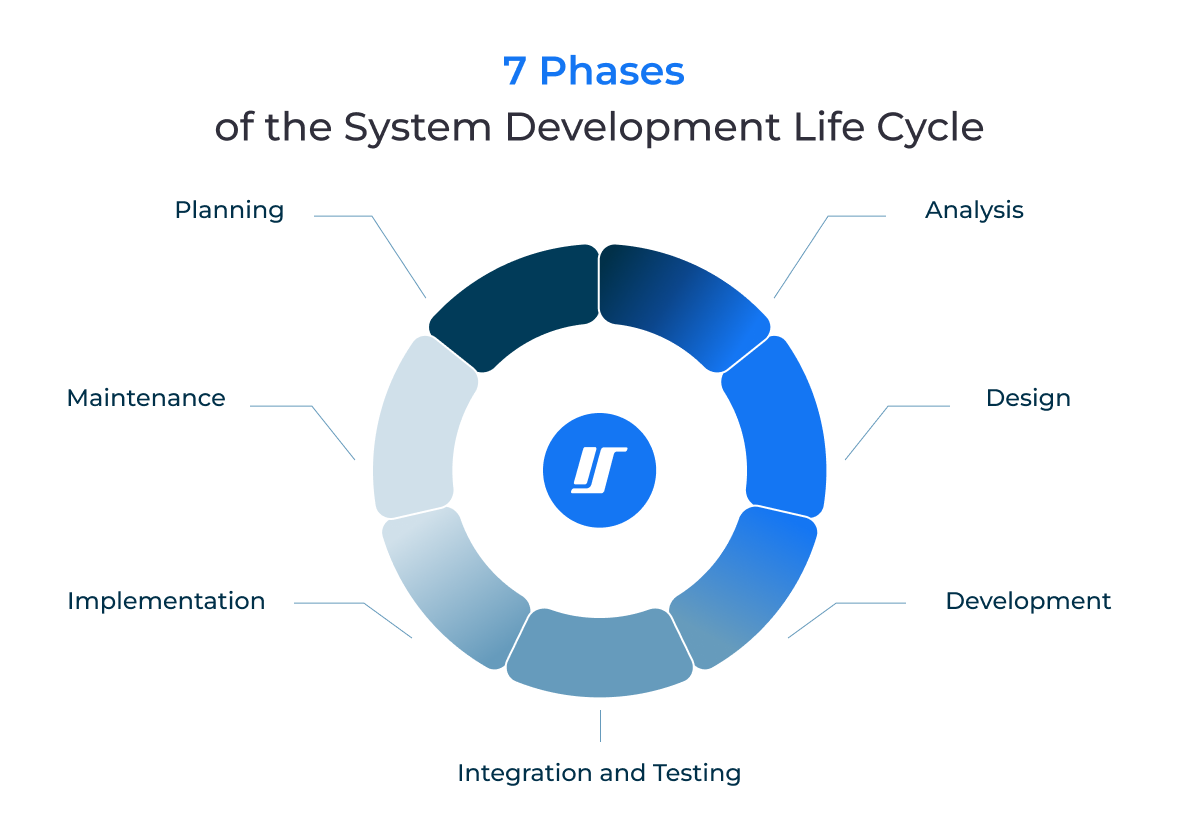
There are 7 stages of system development life cycle. Each requires different specialists and diverse skills for successful project completion. Modern SDLC processes have become increasingly complex and interdisciplinary.
That is why it’s highly recommended that project managers engage a dedicated team of professional developers. Such a team will possess enough expertise and knowledge to launch a first-class software product that perfectly corresponds to all your expectations, needs, and goals.
Let’s take a look at the core tasks associated with each of the 7 phases of system development life cycle!
1. Planning Phase – What Are the Existing Problems?
Planning is one of the core phases of system development life cycle. It acts as the foundation of all SDLC stages and paves the way for the successful execution of upcoming steps, efficient communication, and, ultimately, a successful project launch.
In this phase, the problem or pain the software targets is clearly defined. First, developers and other team members outline objectives for the system and draw a rough plan of how the system will work. Then, they may make use of predictive analysis and AI simulation tools at this stage to test the early-stage validity of an idea. This analysis helps project managers build a picture of the long-term resources required to develop a solution, potential market uptake, and which obstacles might arise.
At its core, the planning process helps identify how a specific problem can be solved with a certain software solution. Crucially, the planning stage involves analysis of the resources and costs needed to complete the project, as well as estimating the overall price of the software developed.
Finally, the planning process clearly defines the outline of system development. The project manager will set deadlines and time frames for each phase of the software development lifecycle, ensuring the product is presented to the market in time.
At this phase, you’ll get a project plan and a feasibility assessment that help you confirm the project's scope, timeline, and budget.
2. Analysis Phase – What Do We Want?
Once the planning is done, it’s time to switch to the research and analysis stage.
In this step, you incorporate more specific data for your new system. This includes the first system prototype drafts, market research, and an evaluation of competitors.
To successfully complete the analysis and put together all the critical information for a certain project, developers should do the following:
- Generate the system requirements. A Software Requirement Specification (SRS) document will be created at this stage. Your DevOps team should have a high degree of input in determining the functional and network requirements of the upcoming project.
- Evaluate existing prototypes. Different prototypes should be evaluated to identify those with the greatest potential.
- Conduct market research. Market research is essential to define the pains and needs of end-consumers. In recent years, automated NLP (natural language processing) research has been undertaken to glean insights from customer reviews and feedback at scale.
- Set concrete goals. Goals are set and allocated to the system life cycle stages. Often, these will correspond to the implementation of specific features.
Most of the information generated at this phase will be contained in the SRS document. It shapes the strict regulations for the project and specifies the exact software model you will eventually implement.
3. Design Phase – What Will the Finished Project Look Like?
The next stage of a system development project is design and prototyping.
This process is an essential precursor to development. It is often incorrectly equated with the actual development process but is rather an extensive prototyping stage.
This step of the system development life cycle can significantly eliminate the time needed to develop the software. It involves outlining the following:
- The system interface
- Databases
- Core software features (including architecture like microservices)
- User interface and usability
- Network and its requirement
As a rule, these features help to finalize the SRS document as well as create the first prototype of the software to get the overall idea of how it should look like.
Prototyping tools, which now offer extensive automation and AI features, significantly streamline this stage. They are used for the fast creation of multiple early-stage working prototypes, which can then be evaluated. AI monitoring tools ensure that best practices are rigorously adhered to.
At this stage, you'll get a validated system architecture, detailed design specification, and approved prototype – a complete blueprint for development.
4. Development Phase – Let’s Create the System
In the development stage of the SDLC, the system creation process produces a working solution. Developers write code and build the app according to the finalized requirements and clear documentation.
This phase includes both front and back-end development. DevOps engineers are essential for allocating self-service resources to developers to streamline the process of testing and rollout, for which CI/CD is typically employed.
This phase of the system development life cycle is often split into different sub-stages, especially if a microservice or miniservice architecture, in which development is broken into separate modules, is chosen.
Developers will typically use multiple tools, programming environments, and languages (C++, PHP, Python, and others), all of which will comply with the project specifications and requirements outlined in the SRS document.
By the end of this phase, you'll get a working software, meeting the compliance and security requirements and ready to move into testing.
5. Testing Phase – Is It the Exact One We Needed?
The testing stage ensures the application’s features work correctly and coherently and fulfill user objectives and expectations.
This process involves detecting the possible bugs, defects, and errors, searching for vulnerabilities, etc., and can sometimes take up even more time compared to the app-building stage.
There are various approaches to testing, and you will likely adopt a mix of methods during this phase. Behavior-driven development, which uses testing outcomes based on plain language to include non-developers in the process, has become increasingly popular.
Similarly, automated and cloud-based platforms, which simulate testing environments, take a significant amount of manual time out of this stage of the system development life cycle. Selenium, a browser testing tool, is one popular example of such a platform.
With our QA and software testing services, you’ll get a test report that confirms your software is ready for deployment. And with it, you can move to implementation of a quality product.
6. Integration and Implementation Phase – How Will We Use It?
Once the product is ready to go, it’s time to make it available to its end users and deploy it to the production environment.
At this stage, the software undergoes final testing through the training or pre-production environment, after which it’s ready for presentation on the market.
It is important that you have contingencies in place when the product is first released to market should any unforeseen issues arise. Microservices architecture, for example, makes it easy to toggle features on and off. And you will likely have multiple rollback protocols. A canary release (to a limited number of users) may be utilized if necessary.
At this phase, you'll get a production release integrated with the target environment. So your users can access and use it.
7. Maintenance Phase – Let’s Make the Improvements
The last but not least important stage of the SDLC process is the maintenance stage, where the software is already being used by end-users.
During the first couple of months, developers might face problems that weren’t detected during initial testing, so they should immediately react to the reported issues and implement the changes needed for the software’s stable and convenient usage.
This is particularly important for large systems, which usually are more difficult to test in the debugging stage.
Automated monitoring tools, which continuously evaluate performance and uptime and detect errors, can assist developers with ongoing quality assurance. This is also known as “instrumentation.”
At this phase, you'll get an updated system with ongoing fixes, security patches, and performance improvements. Everything that this phase involves aims at keeping your software reliable, secure, and aligned with your business needs.
6 Basic SDLC Models and Methodologies
Now that you know the basic SDLC phases and why each of them is important, it’s time to dive into the core models of the system development life cycle.
These are the approaches that can help you to deliver a specific software model with unique characteristics and features. Most developers and project managers opt for one of these 6 approaches. Hybrid models are also popular.
Let’s discuss the major differences and similarities of each.
Waterfall Model
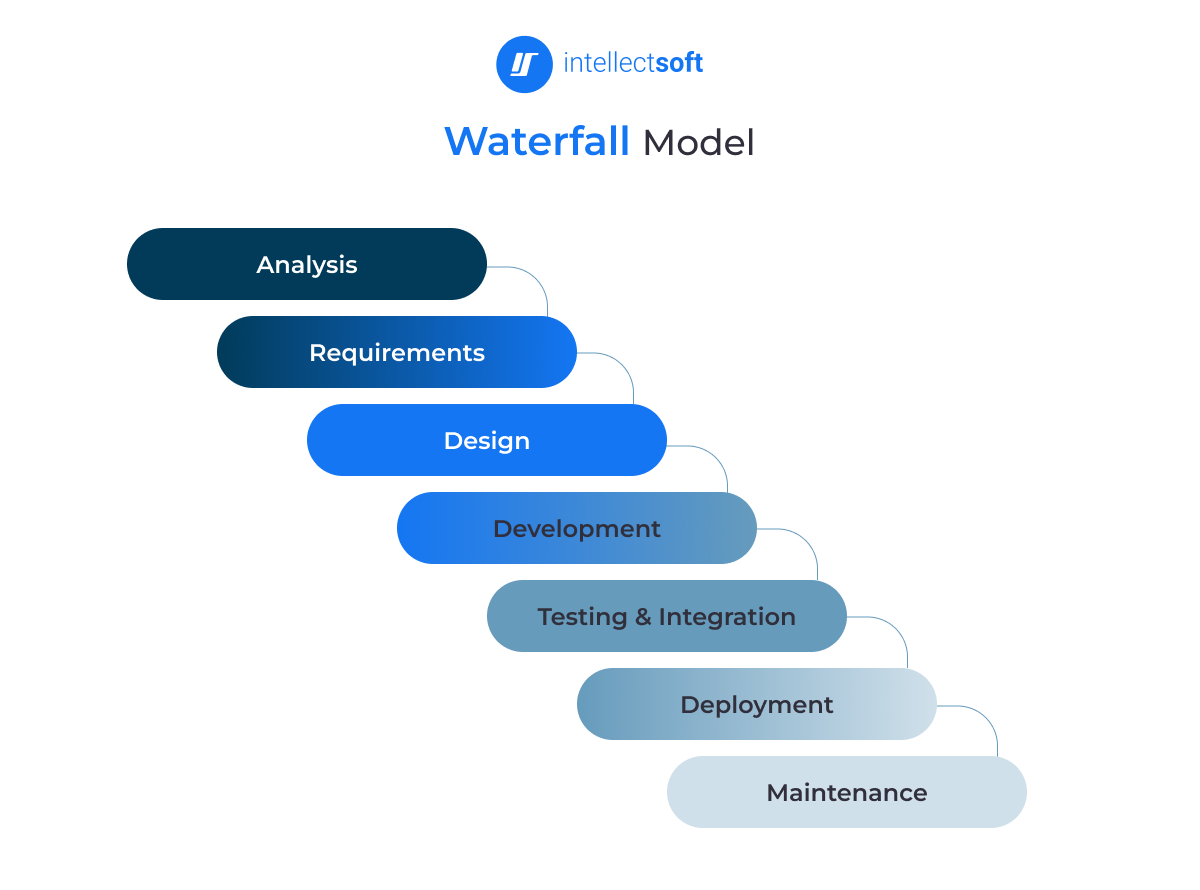
This approach implies a linear type of project phase completion, where each stage has its separate project plan and is strictly related to the previous and next steps of system development.
Typically, each stage must be completed before the next one can begin, and extensive documentation is required to ensure that all tasks are completed before moving on to the next stage. This is to ensure effective communication between teams working apart at different stages.
While a Waterfall model allows for a high degree of structure and clarity, it can be somewhat rigid. It is difficult to go back and make changes at a later stage.
Iterative Model
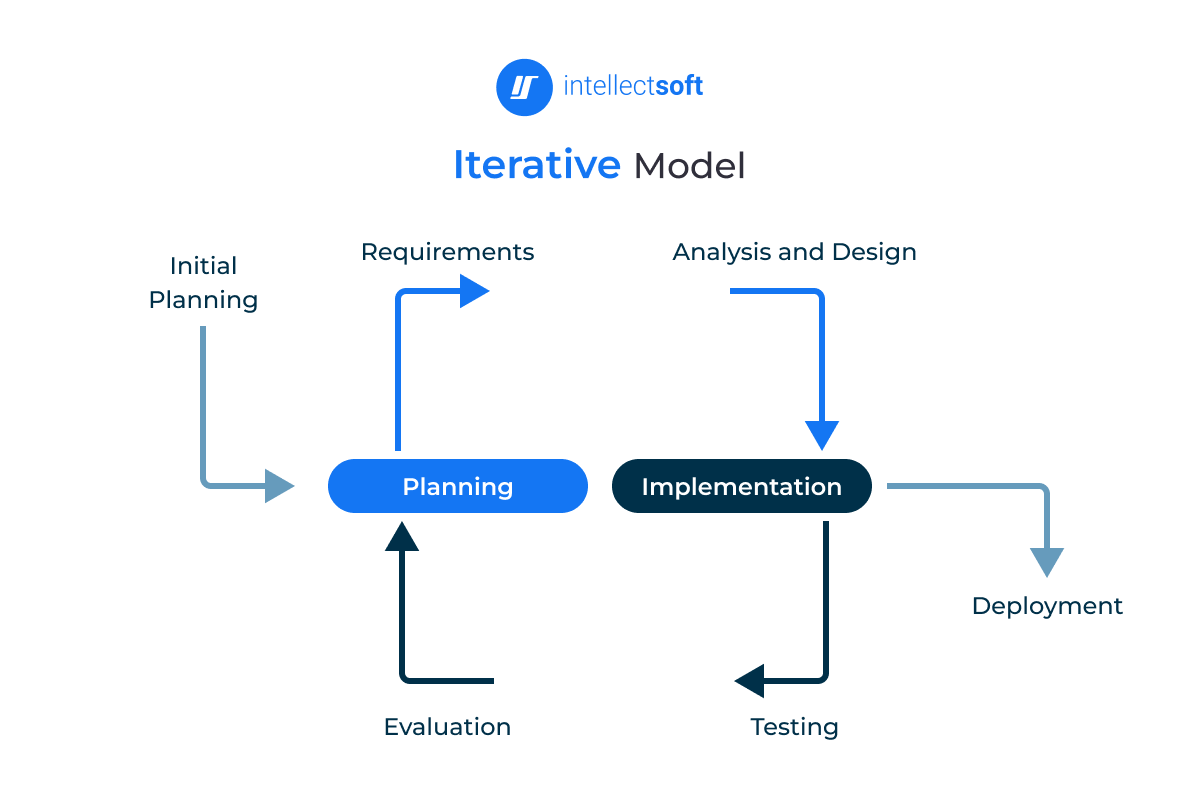
The Iterative model incorporates a series of smaller “waterfalls,” where manageable portions of code are carefully analyzed, tested, and delivered through repeating development cycles. Getting early feedback from an end user enables the elimination of issues and bugs in the early stages of software creation.
The Iterative model is often favored because it is adaptable, and changes are comparatively easier to accommodate.
Spiral Model
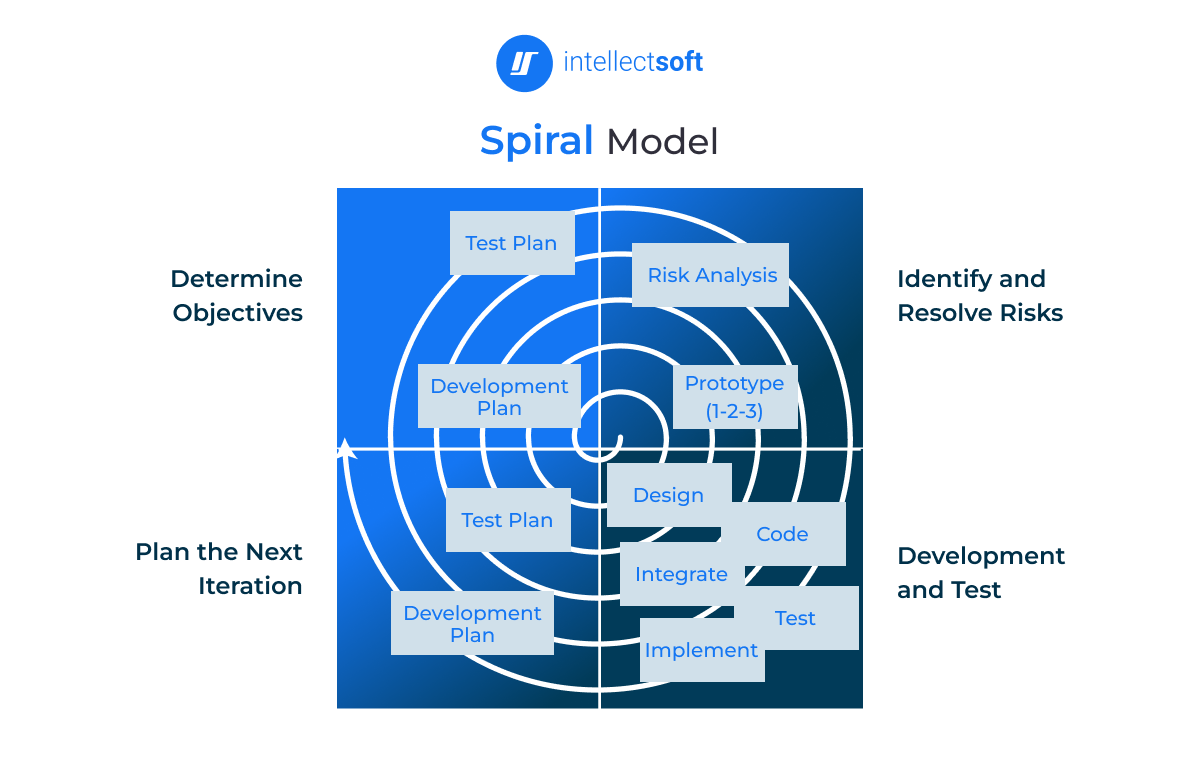
The Spiral model best fits large projects where the risk of issues arising is high. Changes are passed through the different SDLC phases again and again in a so-called “spiral” motion.
It enables regular incorporation of feedback, which significantly reduces the time and costs required to implement changes.
V-Model
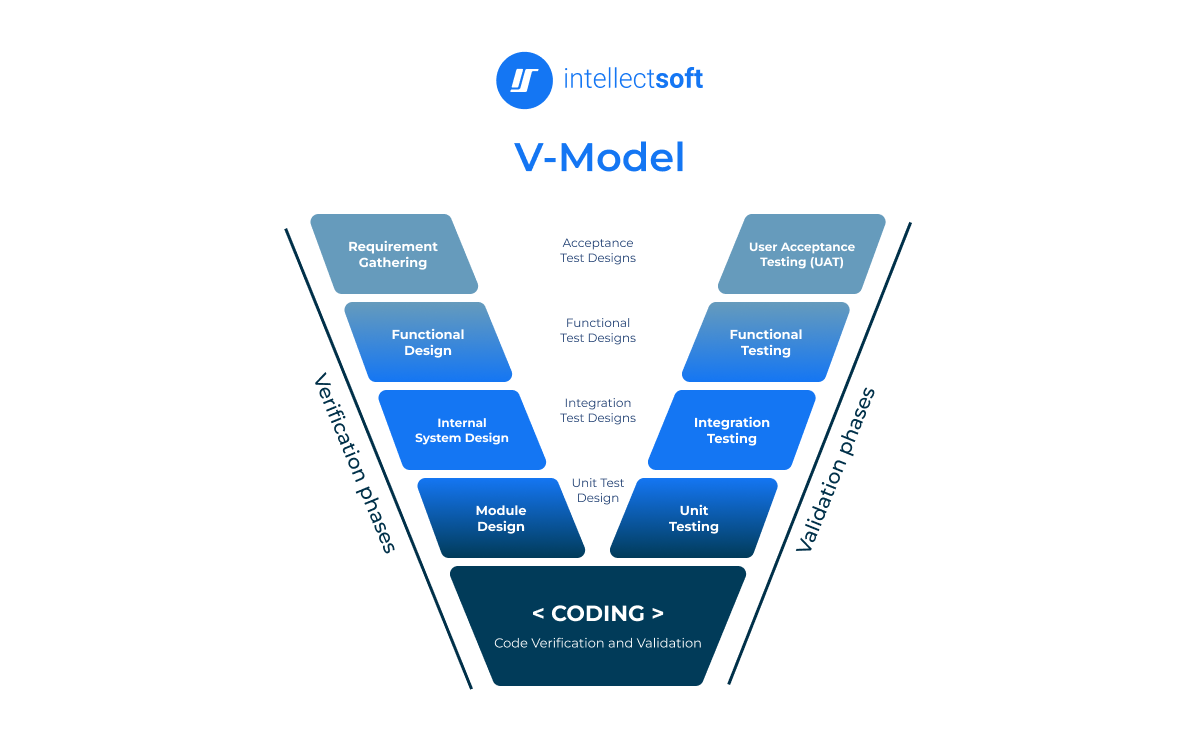
Verification and validation methodology requires a rigorous timeline and large amounts of resources. It is similar to the Waterfall model with the addition of comprehensive parallel testing during the early stages of the SDLC process.
The verification and validation model tends to be resource-intensive and inflexible. For projects with clear requirements where testing is important, it can be useful.
The Big Bang Model
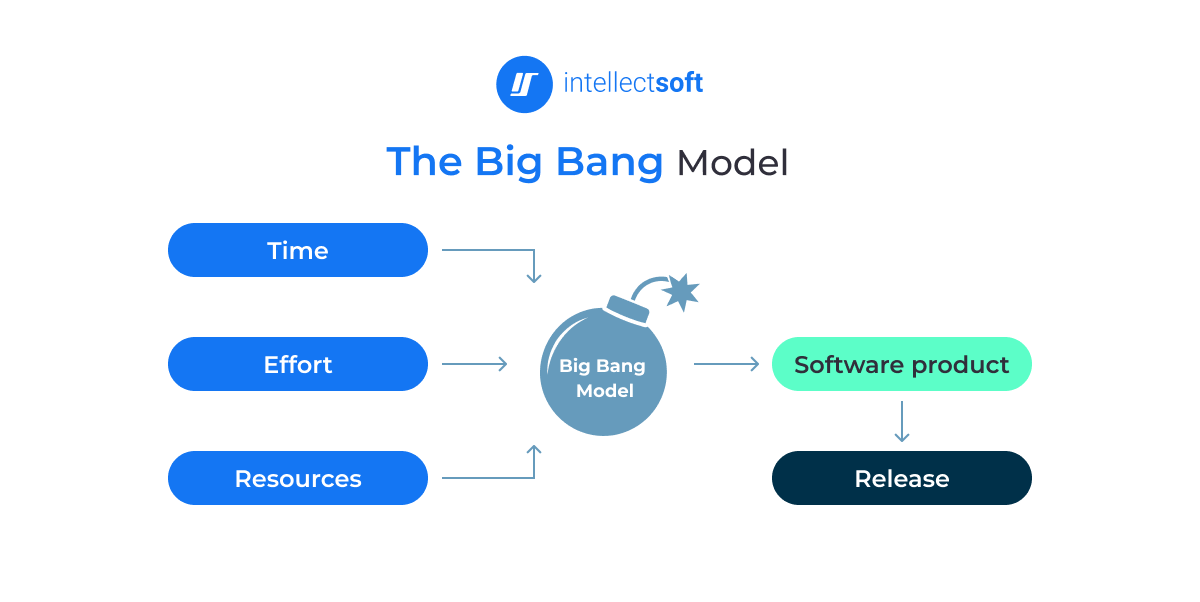
Mostly used for creating and delivering a wide range of ideas, this model fits the clients who don’t have a clear idea or vision of what their final product should look like.
A more concrete vision of project completion is gained via delivering different system variations that may more accurately define the final output.
While it is usually too expensive for the delivery of large projects, this SDLC methodology perfectly works for small or experimental projects.
Agile Model
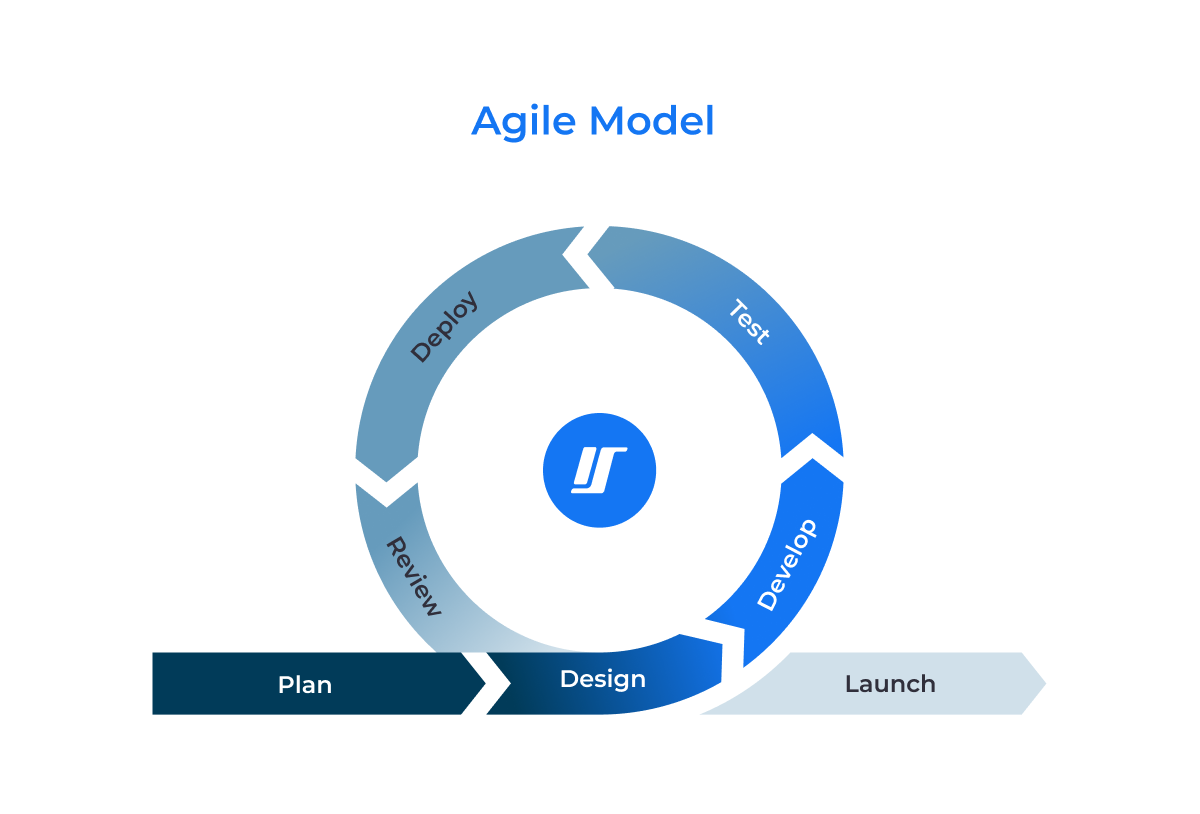
The Agile model prioritizes collaboration and the implementation of small changes based on regular feedback. The Agile model accounts for shifting project requirements, which may become apparent over the course of SDLC.
The Scrum model for agile software development, which is a type of time-constrained Agile model, is popular among developers. Often developers will also use a hybrid of the Agile and Waterfall model, referred to as an “Agile-Waterfall hybrid.” The benefits of Agile methodology are its speed, flexibility, and capacity to produce faster outcomes.
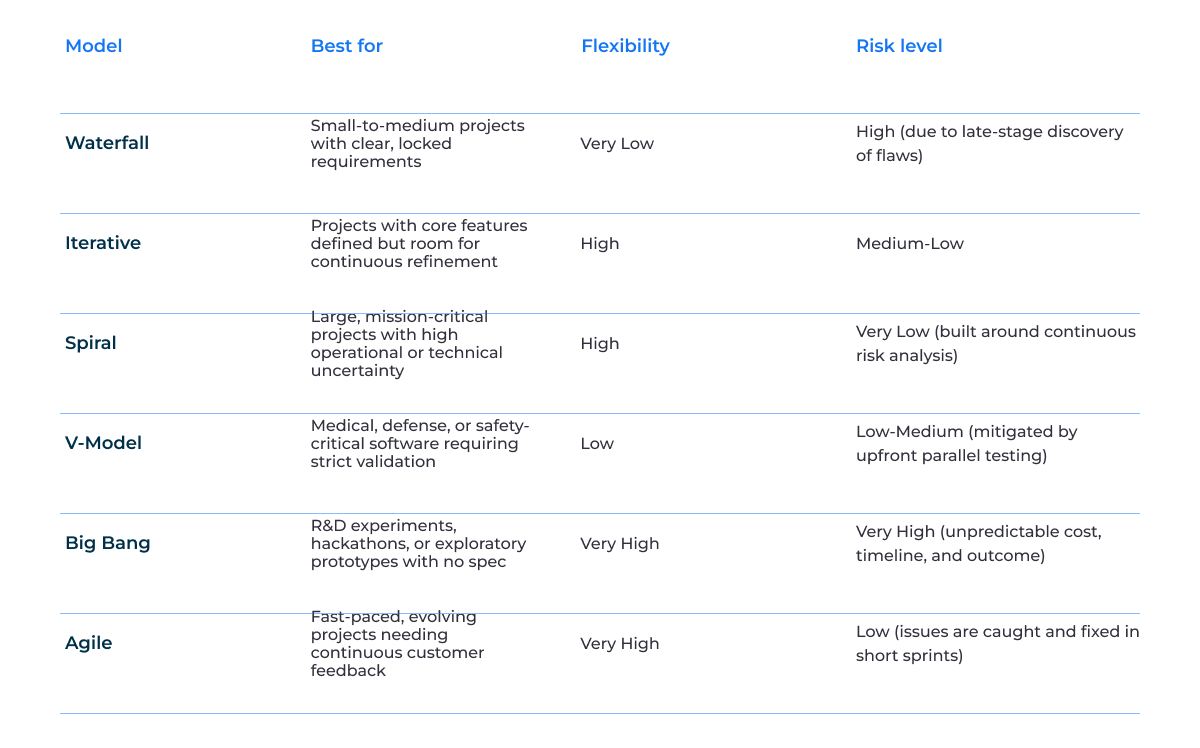
As you can see, different methodologies are used depending on the specific vision, characteristics, and requirements of individual projects. Knowing the structure and nuances of each model can help to pick the one that best fits your project. Hope the table below helps you make your choice.
Security in the System Development Life Cycle
In fact, you need to build and guarantee security at every SDLC phase. Yes, you can add it before launch. But this won’t be the same level of protection.
SDLC approach is reliable because it’s supported by DevSecOps practices. How does it help teams? First, it helps reveal flaws before they turn into problems. Second, it contributes to the release of more secure and stable software. But let’s see how to guarantee security at each stage of the SDLC!
- Planning and Requirements: You need to define security requirements, compliance obligations, and risk management objectives, and all of them should be considered together with business specifications.
- Design: To identify potential attacks and integrate security controls into the system architecture, you should perform threat modeling—all to minimize risks and support the security level.
- Development: Once you have finished coding, you should safeguard coding practices and conduct automated code scanning to detect possible vulnerabilities and fix them on time.
- Testing: Static Application Security Testing (SAST) and Dynamic Application Security Testing (DAST) integrated into the CI/CD pipeline are used to identify security flaws before product release.
- Deployment and Maintenance: Finally, teams have to monitor apps non-stop—this is how to detect suspicious activity, apply security best practices, and respond swiftly to possible threats.
Regulated industries like healthcare, finance, government, and retail require a security-centric approach and quality assurance in software development. So a vendor needs to hold HIPAA-, PCI DSS-, GDPR-, and SOC2 certifications to protect data and keep security under control. With security throughout the SDLC phases, you’ll minimize risks, stay compliant, and build a more reliable solution.
AI in the System Development Life Cycle
Artificial intelligence speeds up every phase of the SDLC, compressing time-to-market. By automating routine tasks and processing data in real time, AI enables teams to work more fruitfully and make fact-based decisions. AI in the software development lifecycle phases boosts developers’ productivity without replacing their expertise and skills, but just supporting them.
- Planning and Analysis: AI analyzes requirements, spots gaps, and improves effort estimation – all based on historical project data.
- Design: Generative AI creates wireframes, prototypes, and architecture concepts. So teams can validate ideas faster.
- Development: AI assistants help engineers with coding. Under expert supervision, AI-assisted engineering produces working solutions. Plus, developers have more time for sophisticated tasks.
- Testing: AI contributes to quality assurance. It speeds up testing cycles while improving software reliability—all by generating test cases, identifying weak areas, and predicting threats before they affect users.
- Deployment and Maintenance: AIOps platforms monitor AI solutions, find anomalies, and forecast issues to prevent them on time.
According to the GitHub Developer Survey (2024), 97% of developers use AI tools for coding, debugging, and documentation. It’s obvious AI plays a vital role in modern software engineering.
AI software development in the SDLC helps teams speed up software delivery. But vibe-coded outputs should pass architecture reviews, testing, security, and quality assurance processes as any human-written code.
Benefits of SDLC
Having covered the major SDLC methodologies, it’s high time to reveal how you can benefit from the system development life cycle:
- Clear project planning and visibility. Project requirements, timelines, resources, budgets, and expected outcomes – all these you can visualize with SDLC. What does this give you? You can plan more wisely and make more fact-based decisions at every phase.
- Explicit roles and responsibilities. With SDLC, you define goals, outcomes, and ownership of each phase. So you can be sure that the software development team and other stakeholders stay aligned with them.
- Higher software quality. Testing and quality assurance are present at every stage of the system development life cycle. That’s why you can spot issues earlier and avoid costly fixes after release.
- Better control over complex projects. As the SDLC divides software development process into stages, complex projects become easier to manage, monitor, and upgrade. Teams can track progress, forecast risks, and keep the project on track.
- More predictable costs and timelines. You can avoid delays and irrelevant expenses with a well-planned, structured software life cycle model that helps you plan your project’s timeline and budget.
- Flexibility to match project needs. A traditional or more iterative approach: businesses can choose the SDLC model that best fits their project structure, risk level, and business goals.
Better cooperation and communication. As a shared development framework, SDLC allows tech and business stakeholders to work on the same objective. Plus, they can interact more closely at each stage, which helps avoid misunderstandings and deliver your solution.
Possible Drawbacks of SDLC
Like any software development approach, SDLC has some potential drawbacks:
- Increased development time and costs if a complex SDLC model is required
- The need to define most project requirements in advance
- Some SDLC models can be restrictive and less flexible
- A high volume of documentation that can slow down development
- The need for specialists with different technical and business expertise
- High client involvement throughout the project
- Testing that can be time-consuming and complex for some development teams
While there are some drawbacks, SDLC has proven to be one of the most effective ways to successfully plan, build, and launch software products.
Alternative development approaches, such as rapid application development (RAD), may be a better fit for some projects. However, they often come with their own limitations and should be chosen based on the project's goals and requirements.
Build Your Solution With Intellectsoft’s Proven SDLC
A skillfully performed system development life cycle process is a guarantee of a high-quality, reliable solution. Plus, you get it faster with minimal risks, rational investments, and outcomes at every stage.
SDLC phases lay the foundation for sustained success, whether you’re building from scratch or revamping an existing platform. And the reason is a structured development process that matters for your business.
As a software development company with 18+ years of experience and 35 Fortune 1000 clients, Intellectsoft helps businesses build and scale secure, enterprise-grade software. And we rely on our proven SDLC practices.
Seeking how to turn your idea into a market-ready solution? Contact our team to discuss your project and pave the way for a quality product.
FAQ
What are the 7 phases of SDLC?
Planning, requirements analysis, design and prototyping, software development, system testing, integration and implementation, and maintenance are stages of system development life cycle sdlc. All these phases guide software development projects from planning to release, resulting in a high-quality solution.
What is the most popular SDLC model?
The Agile model is the most used SDLC approach for the following reasons. First, it breaks development into short, iterative cycles. Second, teams release working software more frequently. Finally, they can modify solutions due to client feedback and changing business needs.
Many companies opt for hybrid SDLC models that combine both Agile and Waterfall. They just expect flexibility and predictability at the same time. Your project scope, legal requirements, team composition, and business goals – all these factors help pick the right SDLC model.
What is the difference between the system development life cycle and the software development life cycle?
The system development life cycle stages involve software, hardware, infrastructure, and data — all technologies that affect your business processes. The software development life cycle is a structured process that teams rely on to build, test, deploy, and maintain applications.
What is the difference between SDLC and Agile?
SDLC system development life cycle is the framework that defines software development cycle phases and leads you to a working solution. Agile is a flexible development approach that you can apply at all stages of the systems development life cycle. The delivery takes place in short sprints with regular testing, feedback, and updates.
